
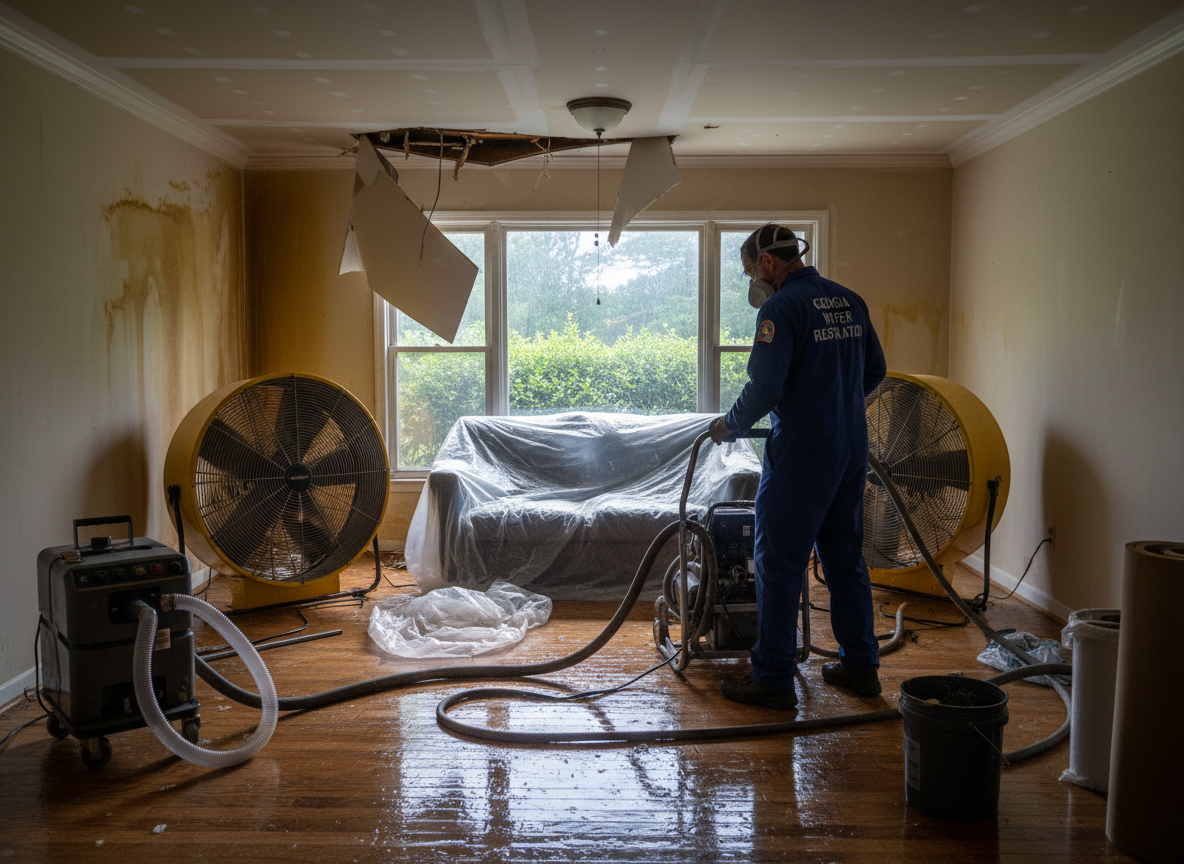
When water damage strikes in Scottdale, Georgia, you need a team that understands the local landscape and acts fast. Atlanta Water Damage Restoration LLC is your dedicated partner, providing comprehensive water damage restoration and mold remediation services throughout the Scottdale area. We know the unique challenges that homes, from the historic bungalows near the Scottdale-Decatur border to the newer developments off North Decatur Road, can face. Our owner-operated team is available 24/7, ready to respond to emergencies day or night, ensuring your property is protected from further damage.
Scottdale's mix of older and newer construction means varying plumbing systems and foundation types, which can influence how water damage manifests and spreads. Whether it's a burst pipe in a charming brick home near Scottdale Park or basement flooding in a property closer to the Avondale Estates line, our expertise allows us to quickly assess the situation. We're familiar with common issues like leaky roofs after a heavy Georgia thunderstorm or appliance failures that can cause significant indoor flooding, and we tailor our approach to each specific Scottdale property.
Around Scottdale
We regularly work near:
- 📍Scottdale Park
- 📍Columbia Theological Seminary
- 📍North Decatur Road
- 📍Avondale Estates border
- 📍Scottdale Elementary School
Water Damage Restoration in Scottdale — Local Notes
- •Many homes in Scottdale, especially those built in the mid-20th century, feature crawl spaces and basements that are particularly susceptible to moisture intrusion, leading to hidden water damage and mold growth.
- •The dense tree canopy prevalent in Scottdale neighborhoods, while beautiful, can contribute to clogged gutters and roof damage, increasing the risk of water penetration during heavy rains.
- •Scottdale's older infrastructure can sometimes lead to localized street flooding during intense downpours, which can back up into basements and lower levels of homes.
- •Homes near the South Fork Peachtree Creek often experience higher humidity levels, making them more prone to mold development following any water intrusion.