
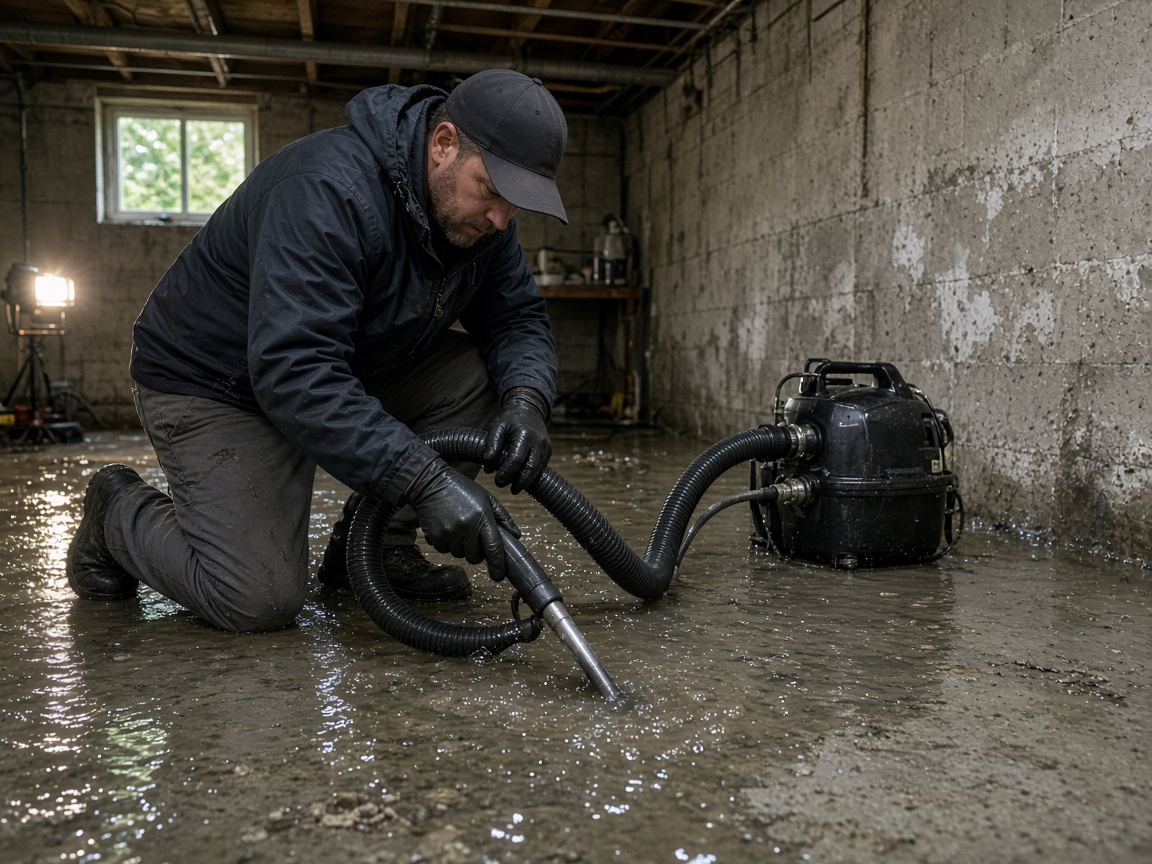
Basement water intrusion in Georgia can stem from a variety of sources, often exacerbated by our area's climate and older housing stock. Heavy rainfall, particularly during spring and summer thunderstorms, frequently overwhelms drainage systems and can lead to hydrostatic pressure forcing water through foundation cracks. Many homes in neighborhoods like Decatur or Sandy Springs, built decades ago, may have less robust waterproofing than modern constructions, making them more susceptible to basement flooding. Beyond weather, common culprits include failing sump pumps, burst pipes from winter freezes, or even appliance malfunctions like water heater leaks. Prompt action is crucial to prevent secondary damage such as mold growth, which can take hold surprisingly quickly in our humid environment.
When we respond to a basement water removal call in Georgia, our first priority is to identify and stop the water source, if it's not already controlled. This might involve anything from isolating a burst pipe to diverting exterior runoff. We then use powerful submersible pumps and industrial-grade wet vacuums to extract standing water rapidly. The terrain around Atlanta, with its rolling hills and varied soil compositions, can sometimes contribute to drainage challenges, making effective water extraction even more critical. Once the bulk of the water is removed, we focus on thorough drying, which is a multi-stage process involving dehumidifiers and air movers to address both surface moisture and moisture absorbed into structural materials like drywall, wood framing, and even concrete.
Addressing water damage in basements requires a deep understanding of structural materials and their reactions to moisture. For instance, while concrete floors might appear dry, they can retain significant moisture, contributing to high humidity levels and potential mold issues if not properly dried. We pay close attention to hidden areas, such as behind finished walls or under flooring, which can harbor moisture and become breeding grounds for mold. The older homes in communities like Marietta or Roswell often feature basements with a mix of materials, from original stone foundations to more recent drywall installations, each requiring a specific approach to drying and restoration. Our goal is to not just remove the water, but to restore the affected area to a dry, safe, and stable condition, ready for any necessary repairs or reconstruction.
Effective basement water removal isn't just about pumps and fans; it's about a systematic approach to restoration that considers the unique challenges of Georgia's homes. For instance, the red clay soil prevalent across much of the Georgia area can become saturated, increasing hydrostatic pressure against basement walls during prolonged wet periods, even when visible leaks aren't immediately apparent. We assess the entire affected zone, from the subfloor to the ceiling, to ensure no hidden moisture pockets are overlooked. Our team is equipped to handle everything from minor water intrusions to severe flooding events, providing upfront quotes and workmanship you can inspect every step of the way, ensuring your basement is returned to a safe and dry state.
Technician insight
In Georgia, the thing that catches most people out with basement water removal is underestimating how quickly mold can develop, especially with our high humidity. Many older homes in areas like Buckhead or Virginia-Highland have basements that aren't fully sealed, and even a small leak, if not dried completely, can turn into a significant mold problem within 48-72 hours. It's not just about getting the standing water out; it's about professional drying and dehumidification to prevent that secondary damage.
Overwhelmed Sump Pump in a Midtown Basement
During a heavy spring downpour, a homeowner in Midtown Atlanta discovered their basement filling with several inches of water due to an overwhelmed and failing sump pump. We arrived to find water spreading across a finished basement floor, threatening electronics and stored items. Our team immediately deployed powerful submersible pumps to remove the standing water, then set up industrial dehumidifiers and air movers to thoroughly dry the concrete slab and lower wall sections, preventing any mold growth and saving the homeowner from extensive repairs.
Basement Water Removal Service Services We Offer
✓Sump Pump Failure Remediation
We address basement flooding caused by malfunctioning or overwhelmed sump pumps, quickly removing water and assessing for underlying issues to prevent future incidents.
✓Burst Pipe Water Extraction
Specialized service for basements flooded due to burst or leaking pipes, including rapid water removal and thorough drying to mitigate structural damage and mold risk.
✓Storm & Flood Water Cleanup
Comprehensive cleanup for basements affected by heavy Georgia rainfall and storm runoff, ensuring all standing water is removed and the area is professionally dried.
✓Appliance Leak Remediation
Targeted water removal and drying for basements impacted by leaks from water heaters, washing machines, or other appliances, minimizing damage and restoring the space.
✓Foundation Leak Detection & Cleanup
We identify and address water intrusion through foundation cracks or porous walls, providing effective water removal and recommendations for long-term solutions.
✓Sewage Backup Cleanup (Basement)
Specialized and biohazard-compliant cleanup for basements affected by sewage backups, ensuring safe and thorough decontamination and restoration of the area.
How it works
- 1
Initial Assessment & Water Source Control
Upon arrival, our team conducts a detailed assessment to identify the water source and extent of damage. We'll work to stop the flow of water, whether it's a burst pipe, foundation leak, or overwhelmed drainage system, to prevent further saturation.
- 2
Water Extraction & Removal
Using powerful submersible pumps and industrial-grade wet vacuums, we rapidly extract all standing water from your basement. This critical step reduces drying time and minimizes potential secondary damage.
- 3
Drying & Dehumidification
After water extraction, we deploy high-capacity air movers and commercial dehumidifiers. This equipment thoroughly dries out structural materials and reduces humidity, preventing mold growth and preserving your home's integrity.
- 4
Moisture Monitoring & Final Inspection
Throughout the drying process, we continuously monitor moisture levels in affected materials using specialized meters. Once optimal dryness is achieved, we conduct a final inspection to ensure the basement is fully restored and safe.
Pricing
Pricing for basement water removal in Georgia varies based on the severity of the flood, the size of the affected area, and the extent of drying and restoration required.