
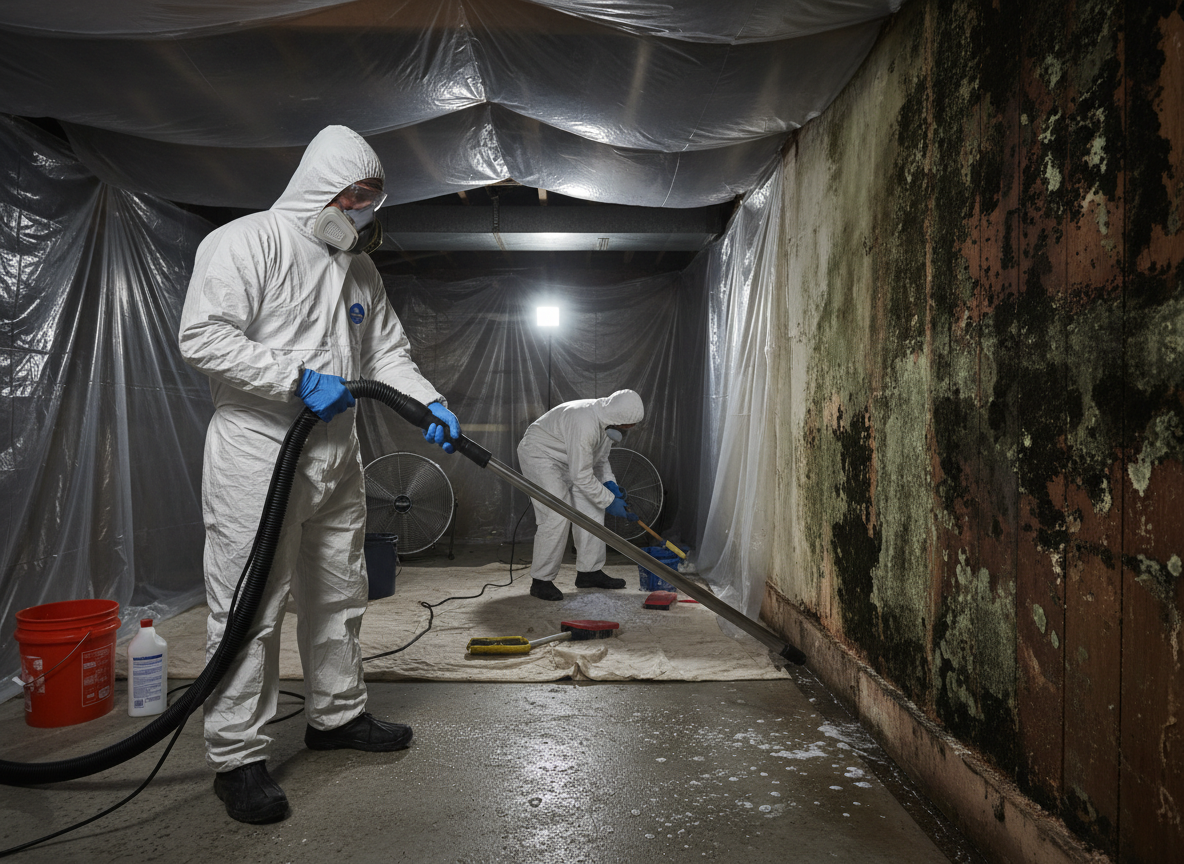
Black mold, often identified by its dark, slimy appearance and musty odor, is a serious concern for property owners throughout Georgia. The humid climate, especially during the long summer months, creates an ideal environment for mold spores to thrive, particularly after water intrusion from heavy rains or plumbing leaks. This type of mold, scientifically known as Stachybotrys chartarum, can grow on various building materials, including drywall, wood, and insulation, often hidden behind walls or under flooring. Our team specializes in identifying and safely removing black mold, preventing its spread and mitigating potential health risks to occupants.
Effective black mold removal requires more than just surface cleaning; it demands a thorough understanding of mold biology and proper containment protocols. In older Georgia homes, common in neighborhoods like Virginia-Highland or Candler Park, materials like plaster and lath or original wood framing can harbor mold deep within their structure, making remediation more complex. We use advanced moisture detection equipment to pinpoint hidden water sources, which are critical for preventing recurrence. Our process involves isolating the contaminated area, removing affected materials, and treating the space to eliminate residual spores, ensuring your property is safe and restored.
Addressing black mold promptly is crucial, as prolonged exposure can lead to respiratory issues, allergic reactions, and other health concerns. The unique construction styles found across Georgia, from the historic homes of Inman Park to the newer developments in Fulton County, each present specific challenges for mold remediation. Our technicians are trained to assess these varied structural elements, from crawl spaces susceptible to moisture in suburban homes to basements in city dwellings. We adhere to industry best practices for safe mold removal, ensuring that the remediation process is not only effective but also protects the integrity of your property.
Beyond the immediate removal, we focus on identifying and rectifying the underlying cause of mold growth. This often involves addressing persistent humidity issues, repairing leaks, or improving ventilation, particularly in areas like attics or basements that are prone to moisture accumulation. Our approach is holistic, aiming to create an environment where mold cannot return. We provide clear, upfront communication throughout the process, explaining the scope of work, expected timelines, and the steps we take to restore your property to a healthy condition, giving you peace of mind.
Technician insight
In Georgia, the thing that catches most people out with black mold removal is underestimating how quickly it can spread, especially with our high humidity. Homeowners often clean visible mold, but fail to address the hidden moisture source—like a slow leak behind a shower wall or a damp crawl space—which allows it to return. You really need to dry out the structure completely, not just the surface, or you're fighting a losing battle.
Hidden Mold in a Midtown Atlanta Basement
A homeowner in Midtown Atlanta noticed a persistent musty smell in their finished basement after a heavy rainstorm. We found significant black mold growth hidden behind drywall, originating from a hairline crack in the foundation that allowed moisture to seep in. We contained the area, removed the affected drywall and insulation, applied antimicrobial treatments, and installed industrial dehumidifiers to dry the structure, successfully eliminating the mold and the odor.
Black Mold Removal Services We Offer
✓Containment and Air Filtration
We establish containment barriers to prevent mold spores from spreading to unaffected areas of your Georgia property and utilize HEPA air scrubbers to capture airborne mold particles.
✓Affected Material Removal
Our team carefully removes and properly disposes of all mold-infested materials, such as drywall, insulation, and flooring, following strict safety protocols to protect your home.
✓Structural Drying and Dehumidification
We employ industrial-grade dehumidifiers and air movers to thoroughly dry out all affected structural elements, eliminating the moisture necessary for mold growth in Georgia's humid climate.
✓Antimicrobial Treatment
After drying, we apply EPA-approved antimicrobial agents to treat all surfaces, ensuring the complete eradication of mold colonies and preventing future growth.
✓HVAC System Inspection and Cleaning
We inspect and clean HVAC systems to prevent the circulation of mold spores throughout your property, a critical step for maintaining indoor air quality in Georgia homes.
✓Odor Removal and Deodorization
We use specialized techniques and equipment to eliminate the distinct musty odors associated with black mold, restoring fresh air to your property.
How it works
- 1
Initial Assessment and Inspection
Our certified technicians conduct a thorough inspection of your Georgia property to identify the extent of black mold growth, locate moisture sources, and develop a comprehensive remediation plan.
- 2
Containment and Air Filtration
We set up containment zones using plastic sheeting and negative air pressure to isolate the contaminated area, preventing mold spores from spreading, and deploy air scrubbers to clean the air.
- 3
Mold Removal and Remediation
Affected porous materials are carefully removed and bagged for disposal. Non-porous surfaces are cleaned with EPA-approved antimicrobial solutions to eliminate mold colonies.
- 4
Drying and Dehumidification
Industrial-grade drying equipment is used to thoroughly dry all affected structural components, ensuring that moisture levels are returned to normal to inhibit future mold growth.
- 5
Final Cleaning and Restoration
The area is cleaned, sanitized, and deodorized. We then conduct a final inspection to ensure all mold has been successfully removed and the environment is safe.
Pricing
Black mold removal costs in Georgia vary significantly based on the affected area's size, the extent of mold growth, and the materials involved. A small, contained area might be less, while extensive growth requiring demolition and multiple drying stages will be more involved.