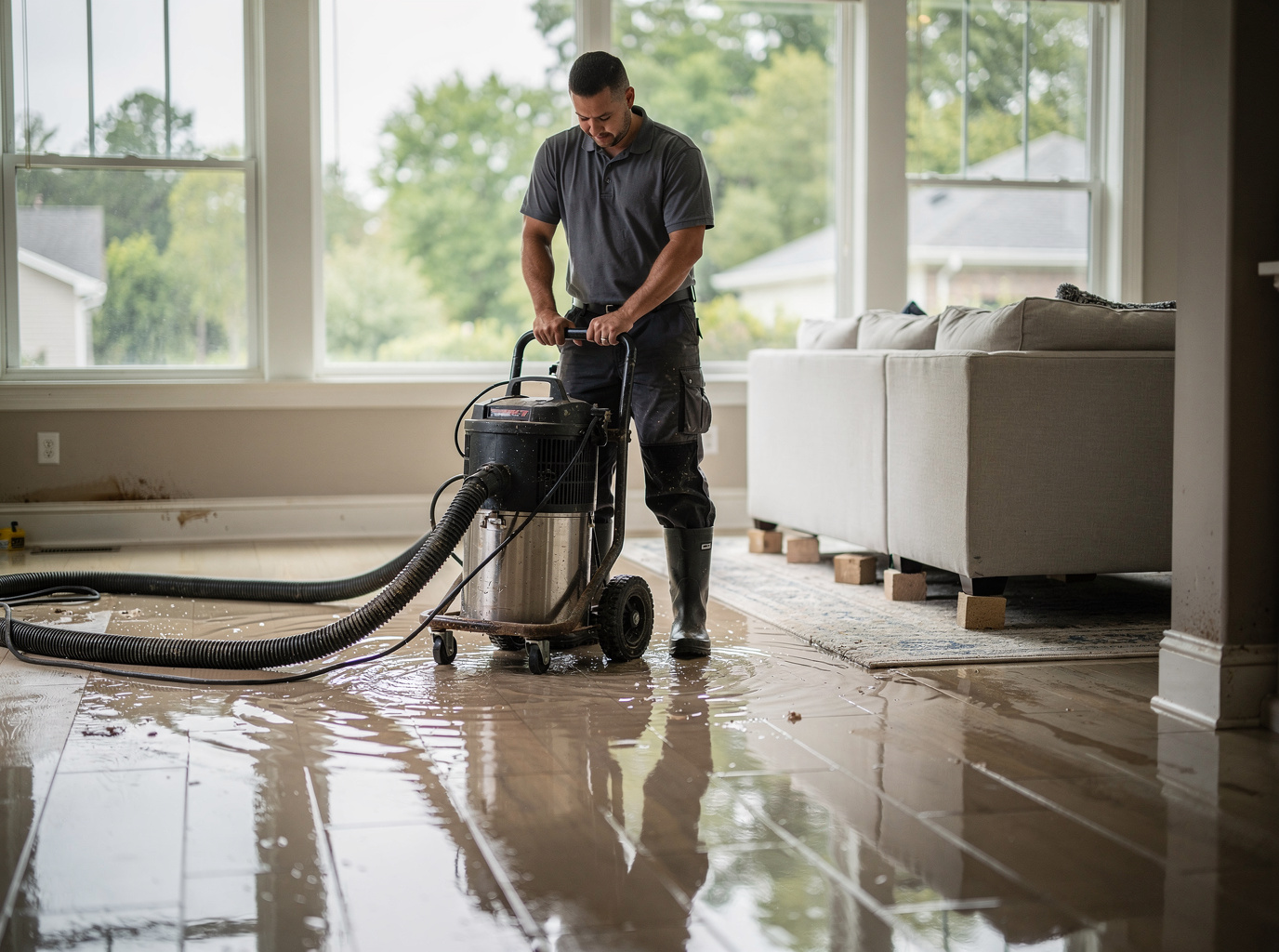
When heavy rains hit Georgia, especially during our intense summer storm season, basements and low-lying areas in neighborhoods like Buckhead or Sandy Springs are particularly vulnerable to flooding. The red clay soil, prevalent throughout the Georgia area, doesn't drain as quickly as other soil types, exacerbating surface water issues and increasing hydrostatic pressure on foundation walls. This can lead to significant water intrusion, not just from overland flow, but also from seepage through cracks in older foundations common in homes built before the 1980s. Our team understands these local challenges and arrives equipped with powerful extraction tools designed to quickly remove standing water, minimizing long-term structural damage and preventing mold growth in the humid climate.
Beyond natural disasters, internal plumbing failures are a common culprit for flood damage in Atlanta. A burst pipe in an older Midtown high-rise or a malfunctioning water heater in a suburban Decatur home can release hundreds of gallons of water in a short period. We don't just extract the visible water; our process involves using specialized moisture meters and thermal imaging cameras to detect hidden pockets of saturation behind walls, under flooring, and within structural cavities. This is crucial in Georgia's climate, where even small amounts of residual moisture can quickly lead to extensive mold problems, especially in areas with limited airflow like crawl spaces or enclosed utility rooms. We address these hidden issues to ensure a complete and lasting restoration.
Effective flood water removal isn't just about drying out a space; it's about mitigating future risks and ensuring the structural integrity of your property. In areas like Roswell or Marietta, where homes often feature finished basements, the complexity of water extraction increases due to layered materials like drywall, carpeting, and insulation. These materials absorb water differently and require specific drying protocols. We also consider the potential for contaminated water, especially in cases of sewage backups or outdoor flooding, and implement appropriate sanitization procedures. Our goal is to restore your property to a safe and dry condition, addressing not only the immediate water problem but also the underlying causes and potential secondary damages like mold or compromised structural elements.
Technician insight
In Georgia, the thing that catches most people out with flood water removal is the hidden moisture in our older homes, especially with the prevalence of red clay soil. The humidity here means that even after the visible water is gone, residual dampness in subfloors or behind drywall can become a full-blown mold problem in just a few days if not addressed with professional-grade drying and dehumidification. You really need to get those moisture readings down to prevent serious secondary damage.
Basement Flood After Summer Storm in Sandy Springs
A homeowner in Sandy Springs called us after a torrential summer downpour overwhelmed their perimeter drains, leaving two inches of standing water across their finished basement. We found that hydrostatic pressure had forced water through a hairline crack in the foundation, soaking carpet and drywall. Our team immediately extracted the water, removed the saturated carpet padding, and set up air movers and dehumidifiers. We then repaired the foundation crack and dried the space completely, preventing mold and restoring their basement.
Flood Water Removal Services Services We Offer
✓Emergency Water Extraction
Immediate deployment of high-capacity pumps and vacuums to remove standing water from flooded basements, crawl spaces, and living areas across Georgia, minimizing damage escalation.
✓Basement Flood Cleanup
Specialized service for flooded basements, addressing water removal, drying, and sanitization for common issues like hydrostatic pressure leaks and burst pipes in Atlanta area homes.
✓Storm Damage Water Removal
Rapid response to water intrusion caused by severe weather events, including heavy rain and overflowing gutters, protecting properties from extensive storm-related flooding.
✓Burst Pipe Water Cleanup
Thorough cleanup and drying after plumbing failures, such as burst pipes or overflowing appliances, preventing widespread water damage and mold growth in your property.
✓Sewage Backup Extraction
Safe and complete removal of contaminated water from sewage backups, including disinfection and deodorization, to restore sanitary conditions in affected areas.
✓Structural Drying & Dehumidification
Utilizing industrial-grade air movers and dehumidifiers to thoroughly dry structural materials and contents, preventing warping, swelling, and secondary damage after water removal.
✓Crawl Space Water Removal
Expert water removal and drying for damp or flooded crawl spaces, crucial for preventing mold, wood rot, and pest infestations common in Georgia's humid climate.
How it works
- 1
24/7 Emergency Call & Assessment
When you call, our team is dispatched immediately, any time of day or night. Upon arrival at your Georgia property, we conduct a rapid assessment to identify the source of the flood, determine the category of water, and evaluate the extent of the damage to plan the most effective removal strategy.
- 2
High-Capacity Water Extraction
Using powerful submersible pumps and industrial-strength wet/dry vacuums, we quickly remove all standing water from your property. This crucial first step minimizes saturation and prevents water from spreading further or causing deeper structural issues.
- 3
Thorough Drying & Dehumidification
After extraction, we deploy advanced drying equipment, including air movers and commercial-grade dehumidifiers, to thoroughly dry out all affected areas, including hidden pockets of moisture in walls and subfloors. This prevents secondary damage like warping, swelling, and mold growth.
- 4
Cleaning, Sanitizing, & Deodorizing
Depending on the water source, affected areas are cleaned, sanitized, and deodorized to eliminate potential health hazards and unpleasant odors. This is especially critical for contaminated water events to ensure a safe environment.
- 5
Moisture Monitoring & Final Inspection
Throughout the drying process, we continuously monitor moisture levels using specialized meters to ensure complete dryness. Once optimal levels are achieved, a final inspection confirms the restoration is complete and your property is returned to its pre-damage condition.
Pricing
Costs for flood water removal vary significantly based on the volume of water, the size of the affected area, and the category of water (clean, gray, or black).